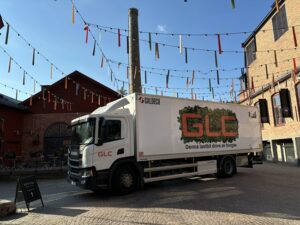
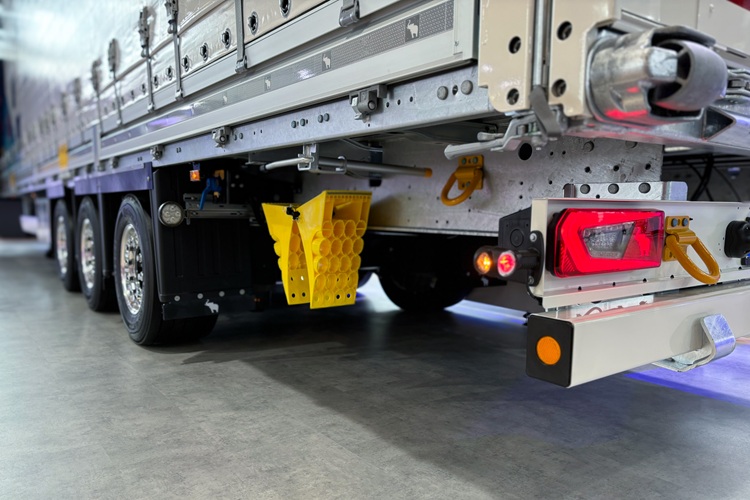
The situation on the semi-trailer market has become significantly more complicated since early March. The sharp rise in fuel prices triggered by the U.S.-Iran conflict effectively stifled the demand that had begun to emerge at the start of the year. The first two months of the year had pointed to a long-awaited market rebound after three years of stagnation. Unfortunately, sentiment deteriorated again in March.
New semi-trailers
The situation is not yet clearly reflected in the registration data. Current figures show continued market growth in Poland, although in reality this is the delivery of contracts signed at the beginning of the year. The current level of orders, however, is exceptionally low. The market expects an increase in freight rates, which would improve the profitability of transportation companies and once again encourage new orders. The production and delivery time for semi-trailers is only a few months and is not as long as it is for trucks. A challenging situation for manufacturers is the rise in aluminum prices, as aluminum is a key structural material in certain types of semi-trailers. This is causing a slow rise in prices, held back only by low demand and limited discounts.
Used semi-trailers
Used semi-trailers have also been selling more slowly since early March, but the market has reacted more calmly to fuel price fluctuations than the market for new vehicles. In some cases, cheaper used semi-trailers may be a viable alternative to new ones. Currently, demand is clearly uneven and fluctuates from month to month. The market is beginning to run short of the newest semi-trailers, those 1–3 years old. Vehicles registered before the pandemic dominate the market. Minor or major sales issues have not yet translated into significant price reductions, as market values are already low relative to the long-term average. More significant price fluctuations are observed in specialty semi-trailers, which depend on conditions in specific industries.
The most numerous and popular curtain-side trailers are depreciating in a predictable manner, but prices for new ones are beginning to rise, which may slow this process in the future, even despite moderate demand. Greater price pressure is currently being felt in the used refrigerated trailer market across all age ranges, up to 15 years old. Interest in these trailers has been noticeably lower for the past six months. The situation is similar for container trailers, where supply and demand have nearly disappeared. Low demand for dump trailers is affecting the values of mainly bulk trailers, whose values rose sharply after the start of the war in Ukraine. Smaller construction versions are currently in greater demand, although there is no sign of a market recovery here either. Moving-floor trailers are seeing fluctuating interest, and it is mainly the newest ones that are becoming cheaper. Older models, over 10 years old, are in greater demand, which is even resulting in a slight increase in their value. Here, too, price pressure on new semi-trailers is beginning to be felt, due to the high proportion of aluminum in their construction.
Used semi-trailer stocks
Since March, the number of used semi-trailers available on the market – particularly curtain-sided ones – has begun to rise significantly in the wake of a decline in new purchases. The used vehicle market reacted almost immediately to the rise in fuel prices. Currently, the supply of semi-trailers, as measured by the number of listings, is stabilizing, although demand has not yet returned to the level seen at the beginning of the year.
Other types of semi-trailers are not showing such a sharp reaction to changes in demand. The number of listings appears surprisingly stable, given the weak demand for refrigerated units, dump trailers, and container semi-trailers.
All rights reserved. Reproduction without approval of Expertdata Sp. z o.o. prohibited. Full analysis in Polish available for download after logging in. Download sample analysis to check the content and data (in Polish).